Yesterday, there was a question on an enterprise architecture discussion forum asking whether Powerpoint could have any value as an EA tool? I was interested to read the comments where there was a fairly strong viewpoint from many of the posters that any EA work done in Powerpoint could never have any value as enterprise architecture, and that Powerpoint itself offered zero value.
Although this was a question about EA tooling, I think there is a deeper question hiding below the surface – just what is enterprise architecture anyway?
For deeper questions like this, I often reach out find an analogy that can help me explore the question in a broader context, and perhaps to avoid some of the baggage that we all carry when we think within our own discipline. So here, there is an obvious analogy that we can use – physical architecture. However, we can gain more insight if we can find a specific area of physical architecture that has a more analogy.
We could choose architecting a large building or bridge (that would have the complexity) but it’s still a single construction – that would be more akin to solution architecture. We need something bigger – even more complex, and with a much longer timescale.
So, the analogy I’m going to use is large scale urban renewal. I think this captures a number of important facets of EA in large companies today :
- the brown-field nature of an urban landscape is representative of the IT estate of a large company
- the time-scales involved are similar – an urban renewal project and a large scale IT transformation will both take decades
- The need for true transformation is clear – an ageing urban area needs regeneration if it is to survive, and similarly IT estates today are struggling under accumulated technical debt and need to be substantially renewed
- Both urban renewal and IT estate transformation require changes to made whilst continuing to support data to day essential services.
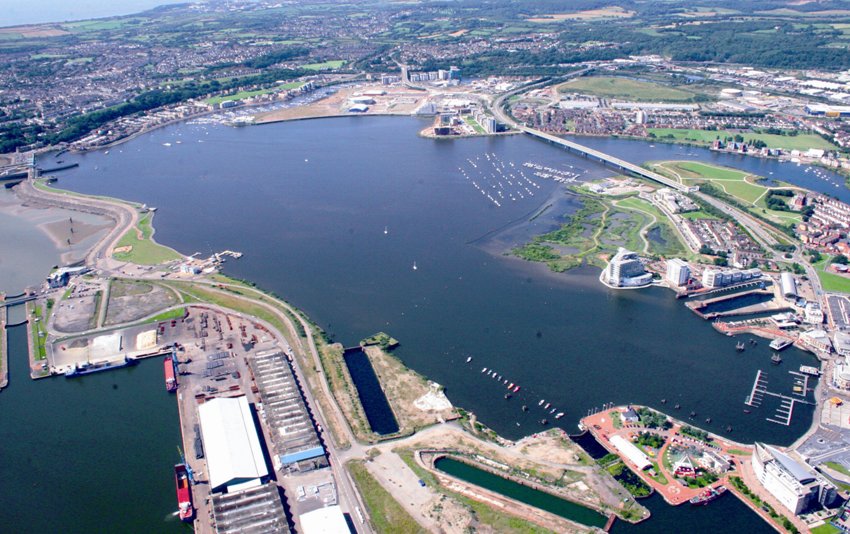
I’m lucky enough to live very close one of the more successful urban renewal projects – the transformation of the old Cardiff Docks to the modern Cardiff Bay. The regeneration was started in 1986, the year I graduated at Cardiff University, and so I have been lucky enough to watch the redevelopment over the whole 33 years. Cardiff Docks (including Tiger Bay)had been in terminal decline for many years; although at its peak it was one of the largest dock systems in the world serving the coal and steel industries of South Wales.
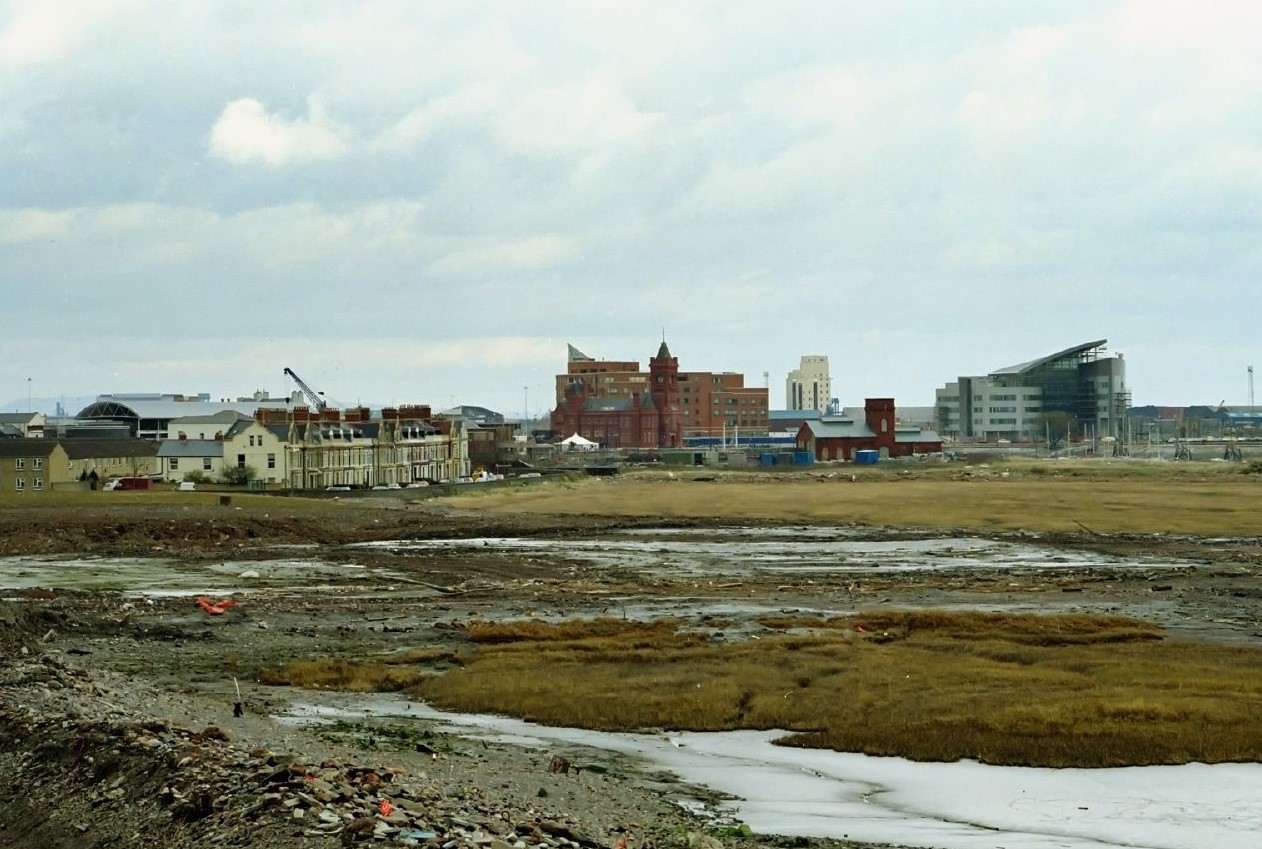
The regeneration is still continuing today, although at a slower pace than in the early days, and with it’s fair share of controversies. Just like most projects of this size its impossible to keep everyone happy all the time – perhaps a lesson for enterprise architects here too.
I will come back to some other broader lessons that can be learned from this analogy in future articles, but today I want to focus on what we can learn about the overall approach to the project.
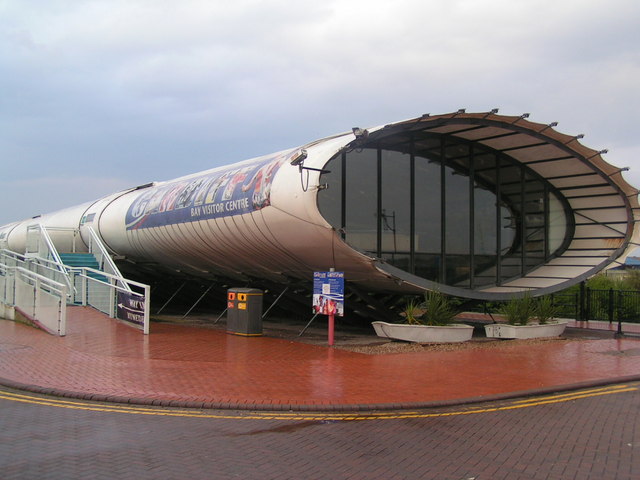
Right at the very start of the project, one of the first things that the Cardiff Bay Development Corporation did was to create a visionary model of what the bay might look like. It was housed in a special space-age (at least it felt that at the time) building – The Cardiff Bay Visitor Centre. It included a scale model of how the urban planners and architects envisioned what Cardiff Bay would look like at the end of the planned 25 year project.
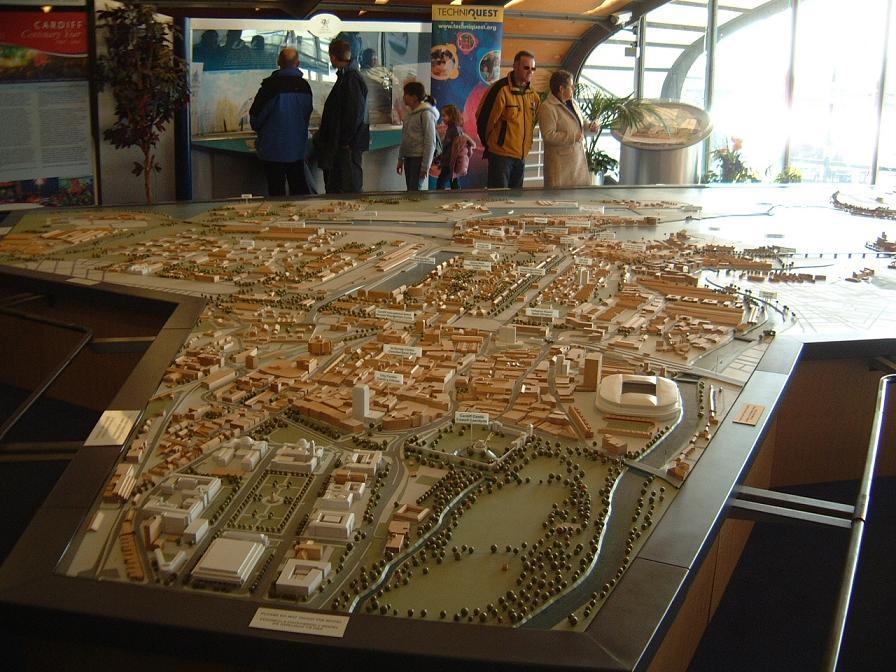
Much of what was in that original model was provisional, and what has been delivered over the following 30 years has changed somewhat from the original vision, but the visionary model had served its purpose well. It communicated the vision to the local politicians and decision-makes, the local residents and the general public so that there was a generally good level of support for the project. The vision wasn’t a fully worked out design – it was broad brush with only the essential high-level surveys and design work completed. However, this was sufficient to build broad support for the necessary funding and to line up the necessary planning and legal changes.
And this is where I want to draw the comparison. As enterprise architects looking after the long-term future of our organisations IT estate, we need to build a vision, to communicate that vision, and to build support across the organisation for the vision to be realised in the long term.
This is definitely not a detailed design; it doesn’t represent a specific future state, but more of a statement of direction. There is also no detailed survey of the current state – we will have a general view on the current landscape but only in general terms. We will not have built a full representation of the existing estate.
So, this is a long roundabout way of answering the original question. If enterprise architecture is (at least in part) about building a rough-sketch vision and communicating that to a general audience much broader than IT, then I would suggest that perhaps Powerpoint or similar is exactly the right tool for the job. Using a technical EA tool with the broader non-IT business users is not going to work, and until there is sufficient general support then there will simply be no funding for a detailed current-state analysis or future architecture design. I’m not against using specialised EA tooling, but, in truth, they are more like the detailed architecture blueprints than they are about a visionary model.
As an Enterprise Architect looking after the strategic vision I’ll always use the best tool for communicating my vision to business users – after all the systems that we build are there to support them, and they will be paying the bills.


 Simon Griffiths
Leave a comment