AI Coding Tools Are Not the End of Craft
AI coding tools change the economics of software work, but they make judgement, craft, testing and responsibility more important rather than less.
Series
What carpentry can teach us about AI, skill and the future of software.
My father spent most of his working life around wood, tools and buildings. He was a shop fitter, then an independent kitchen fitter, and later a carpentry and construction lecturer. His career crossed several versions of the same trade: the world of hand skill and apprenticeship, the world of electric tools and fitted kitchens, and the world where DIY became normal enough that ordinary people started doing work they would once have paid a tradesman to do.
I keep thinking about that arc when people talk about AI and software development. Not because software is carpentry with keyboards, but because both show what happens when tools change the economics of a craft.
This series follows that thread: who captures the value when tools get powerful, what happens to apprenticeship when the early work is automated, where amateur work hits its ceiling, and whether craft disappears or simply moves somewhere less visible.
Start with AI Coding Tools Are Not the End of Craft .
AI coding tools change the economics of software work, but they make judgement, craft, testing and responsibility more important rather than less.
AI makes one skilled person extraordinarily productive. But a business needs more kinds of judgement than any one person holds, and that is the constraint the hype quietly ignores.
AI can do the beginner work. That is exactly the problem, because the beginner work is how beginners became experts. Construction already ran this experiment, and the bill arrived decades later.
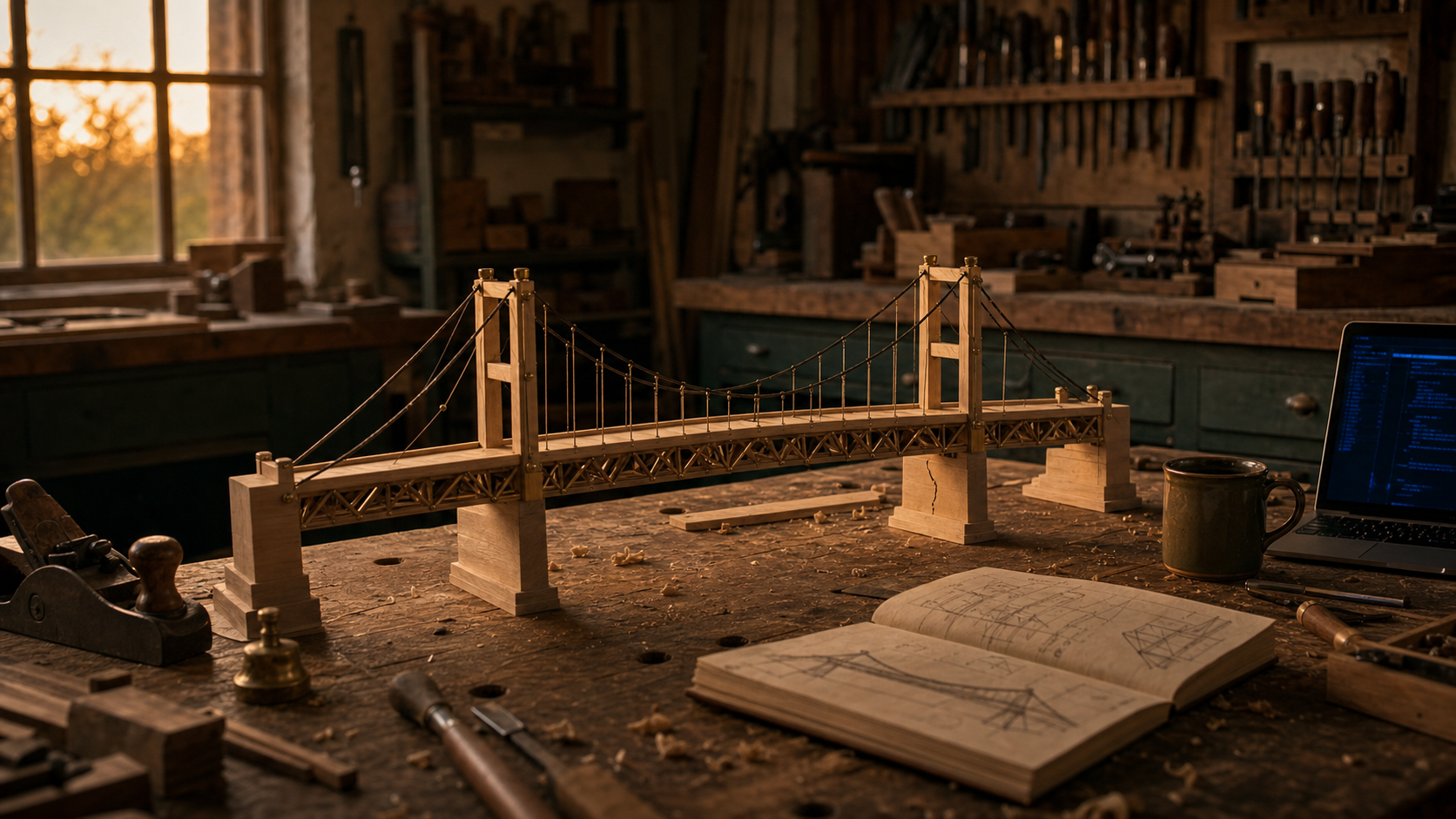
A wonky shelf looks wonky. But the most celebrated engineers have built magnificent structures with fatal flaws nobody could see. Software has always had that problem, and unsupervised AI takes it somewhere genuinely unknown.
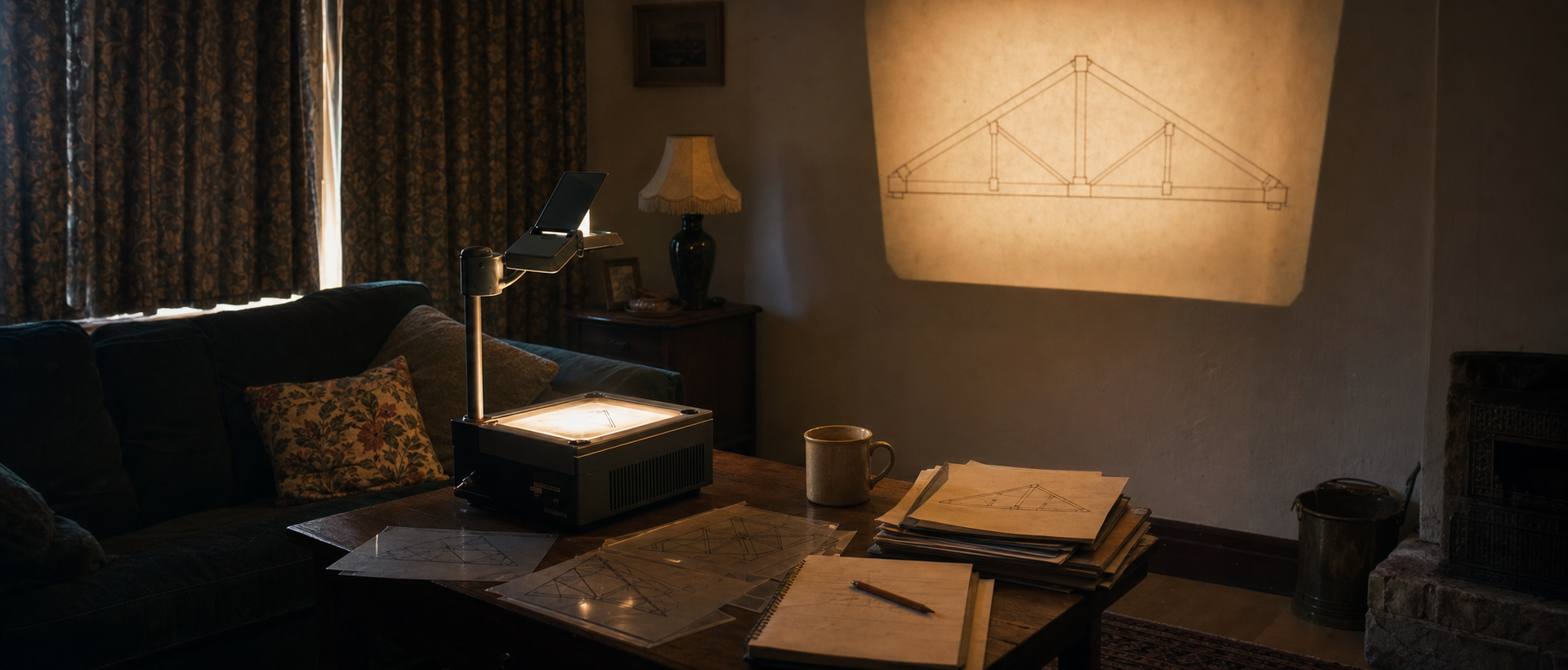
My father already knew his trade in his hands. Becoming a lecturer meant serving a second apprenticeship on top of it — and what he taught me in a darkened living room was never really about roof trusses.